
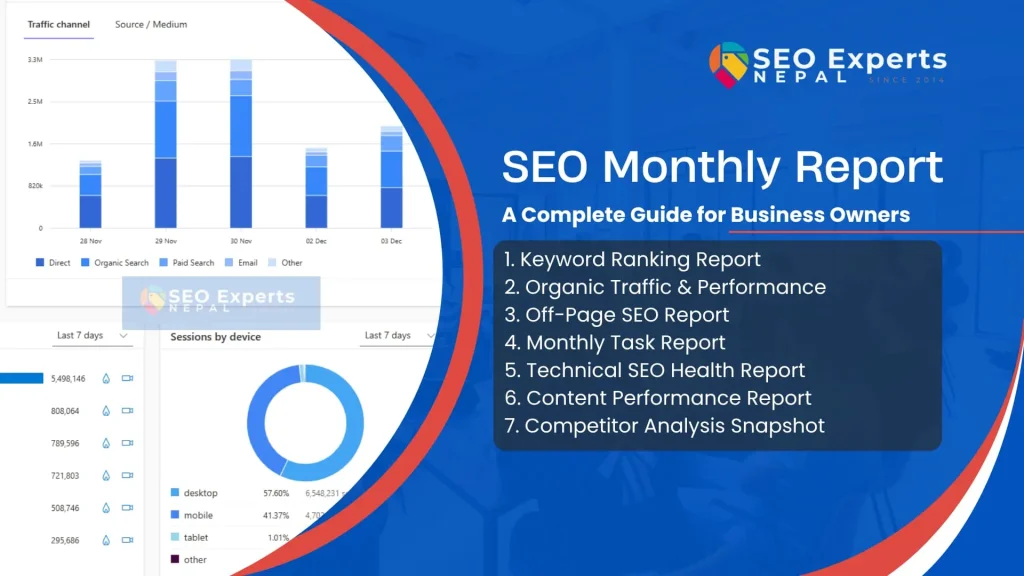
When you invest in SEO, you’re not just paying for rankings you’re paying for measurable growth, visibility, and long-term business impact. Yet, one of the biggest concerns clients have is: “What exactly should I be getting every month from my SEO agency in Nepal?”
A good SEO Monthly Report isn’t just about numbers it should clearly show what’s working, what’s been done, and what comes next. Instead of confusing data, it should give you a simple picture of your website’s progress.
Usually, these reports cover important areas like how much organic traffic your site is getting, how your keywords are ranking, the backlinks you’ve earned, and the overall technical condition of your website. More importantly, it should explain what these results mean and what actions will be taken moving forward.
In this blog, we’ll walk you through what a proper SEO report should include, so you can easily understand the value of your SEO efforts and make informed decisions.
1. Keyword Ranking Report:
Keyword rankings are one of the most visible indicators of SEO progress. A proper report should show:
- Target keywords and their current positions
- Movement (increase or decrease compared to last month)
- Keywords entering Top 10 or Top 3
- High-value keywords driving traffic
This section helps you understand how your visibility in search engines is improving over time. More importantly, it should highlight which keywords are actually bringing business results, not just traffic.
2. Organic Traffic & Performance Overview:
This section shows how your SEO efforts are actually impacting your website.
In a SEO monthly report, you should see how much organic traffic your site is getting, including the number of users and sessions. It should also highlight the growth compared to the previous month, so you can clearly understand whether your performance is improving or not.
Along with that, the report should point out your top-performing pages the ones bringing in the most visitors. You’ll also get insights into user behavior, such as bounce rate and engagement, to understand how people interact with your site after landing on it.
Overall, this part of the report helps you see the bigger picture of your website’s growth and where improvements can be made moving forward.
3. Off-Page SEO Report (Backlinks / Off-Page Links):
Backlinks play a major role in improving your website’s search rankings, so this section is an important part of any SEO report.
Here, you should see how many new backlinks were built during the month. But it’s not just about numbers – the report should also explain the quality of those links, such as whether they come from high-authority websites or low-quality sources.
4. Monthly Off-Page & On-Page Task Report:
Clients often miss this but it’s one of the most important parts.
- On-Page SEO Tasks:
- Content optimization
- Meta title & description updates
- Internal linking improvements
- Technical fixes (speed, indexing, errors)
- Off-Page SEO Tasks:
- Link building campaigns
- Guest posting
- Directory submissions
- Brand mentions
5. Technical SEO Health Report:
Technical SEO is the foundation of your website performance.
Monthly reports should include:
- Website speed (Core Web Vitals)
- Crawl errors
- Indexing issues
- Mobile usability
Technical health is important because it affects both your rankings and user experience. In short, SEO reports include key technical metrics to make sure your website stays optimized, fast, and easy to access for both users and search engines.
6. Content Performance Report:
Content drives SEO success.
Your report should highlight:
- Blog performance
- New content published
- Pages generating traffic
- Content gaps and opportunities
7. Conversion & ROI Tracking:
This is where many agencies fail but it’s what matters most.
You should see:
- Leads generated from SEO
- Conversions (forms, calls, sales)
- Revenue (if tracked)
8. Competitor Analysis Snapshot:
A good SEO report doesn’t just focus on your website it shows where you stand.
It should include:
- Competitor keyword comparison
- Visibility trends
- Opportunities to outrank competitors
This helps you stay ahead in your market.
9. Future Plan & Strategy (Next Month Roadmap):
Finally, your report should always include:
- Next month’s SEO strategy
- Priority tasks
- Growth opportunities
Because SEO is ongoing not a one-time task.

Conclusion
A SEO Monthly Report is more than just numbers it’s a clear reflection of your website’s growth, the work being done, and the strategy moving forward. From keyword rankings and traffic performance to off-page links and monthly SEO tasks, every section plays a role in showing real progress. As a client, you should always expect transparency, actionable insights, and a clear roadmap. When your SEO Monthly Reports cover all these areas, you can confidently track results and make informed business decisions.
Ready to take your website growth seriously? Visit SEO Experts Nepal and start optimizing your SEO today.
✓ Also Read: Basic SEO Terms for Beginners and Clients
Most Asked Question on Monthly SEO Report:
1. How often should I receive an SEO report?
✓ You should receive a detailed SEO report once every month, along with optional weekly updates for ongoing campaigns.
2. What is the most important part of an SEO report?
✓ The most important parts are keyword rankings, organic traffic, backlinks (off-page links), and the work done (on-page & off-page tasks).
3. How long does it take to see results in SEO?
✓ SEO is a long-term strategy. Typically, you can start seeing noticeable improvements within 3 to 6 months, depending on competition and industry.
4. Why are backlinks important in SEO reports?
✓ Backlinks help improve your website’s authority and rankings. A good report should show quality links built each month, not just quantity.
5. What should I do if my SEO report shows no improvement?
✓ Check if the report includes clear strategies and tasks performed. If not, discuss with your SEO provider or consider revising your SEO strategy for better results.